
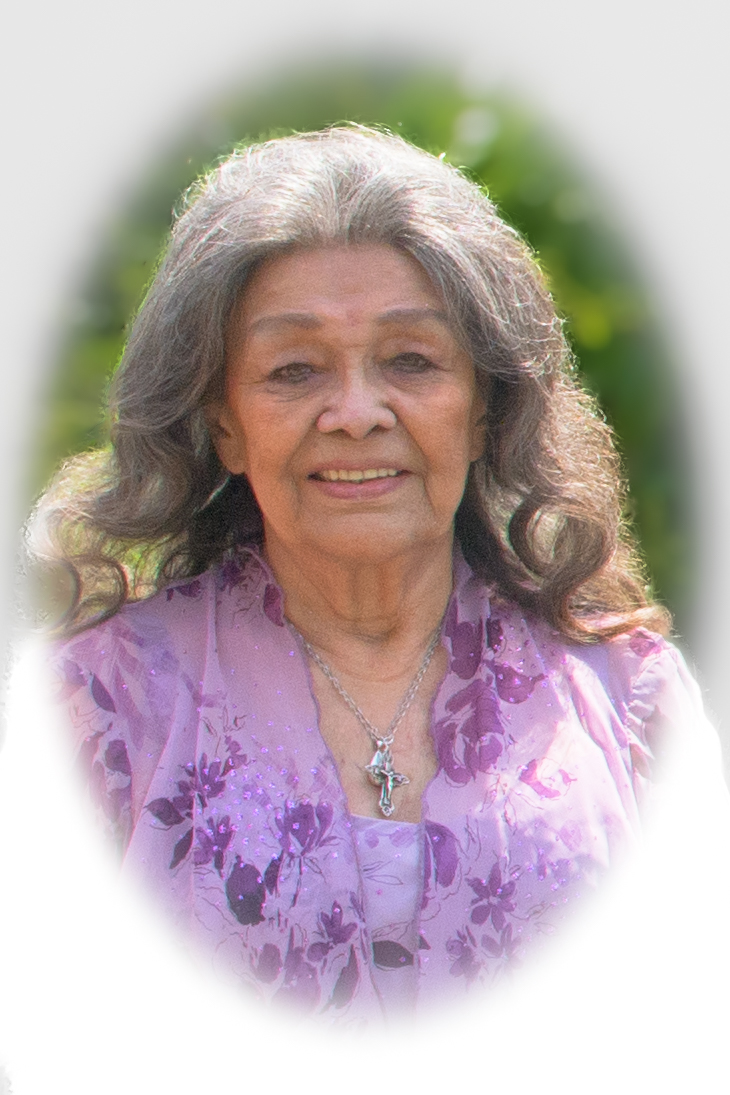
Nanny’s Story
Elaine (Tootsie) Moreau, née Callihoo
Nanny, Nan, Gram, Mom, Auntie and Sis
March 9, 1940 – September 14, 2026
How do you begin to tell the story of a woman whose life was so big, so colourful and so exuberant that it seems impossible to fit it into a few short pages?
Where do you even begin?
Our Nan was not a delicate little daisy.
She was tough. Stubborn. Fiercely independent. Determined. Glamorous. Funny. Opinionated. And sometimes just plain pigheaded.
She had a strength about her that could fill a room. She had stories for everything, opinions about most things, and absolutely no trouble telling you exactly what she thought.
And I suppose that is where I get some of my own stubbornness.
The older I get, the more I realize how much of her lives in me.
The Beginning
Elaine Moreau, née Callihoo, was born on March 9, 1940, into the Callihoo family.
She was the fourth of seven children — a true middle child in every sense.
And knowing Nanny, somehow that explains a few things.
She grew up on the Michel reserve, in what is now known as the Hamlet of Callihoo.
The story she told me was that she was born in the middle of a farmer’s field while her mother was working the land.
Apparently, Gram decided that waiting was no longer an option.
That story seems fitting because Nan spent her entire life doing things on her own terms.
Some of the stories she told about those early years were little ones, but those are often the ones that stay with me the most.
She once told me about sitting inside the house as a little girl, practising her writing on the whitewashed walls.
Of course, her mother wasn’t exactly thrilled to discover that her walls had become Elaine’s personal writing paper and went to chastise her.
But her father stopped her.
“Leave her alone. She’s learning.”
I love that story.
Here was this little girl writing all over the walls, probably making an absolute mess of them, and her Daddy didn’t see the mess.
He saw his little girl learning.
And whenever Gram spoke about her father, she never simply called him her father or her dad.
Even all those years later, she still called him “my Daddy.”
She was in her eighties, and he was still her Daddy.
There is something about that which tells its own story.
She also remembered walking to school with her brothers, Uncle James and Uncle Leonard.
Unfortunately for Gram, her brothers apparently had a particular fondness for climbing trees and throwing garter snakes down at her.
And that, according to Nanny, was where her lifelong terror of snakes began.
Then, in 1949, her Daddy died.
Nanny was only nine years old.
When you remember that she was still calling him her Daddy more than seventy years later, you begin to understand just how deeply that loss stayed with her.
His death changed everything for the family.
A year or two later, Granny Ida packed up her children, and they left the reserve and moved to Edmonton.
And with that move, another chapter of her life began.
Starting Over in the City
The family initially stayed with Nan’s sister, Auntie Dorothy, in Edmonton’s West End, which at the time was known as Jasper Place.
Eventually, they found themselves living in a little one-room shack on a farmer’s property.
It was essentially a barn or shed that had been turned into a home.
And somehow, they made it work.
There was a curtain dividing the room. Nan, Granny and the two youngest boys slept on one side, while the older boys slept on the other.
Eventually, they added onto the “shack” and made what we would probably call a bunkhouse today.
Granny had to work to support the family, including cleaning houses. While her mother was away working, Nan helped care for her younger brothers.
She was still only a young girl herself.
Sometimes the women whose homes Granny cleaned were getting rid of their children’s clothing and would give it to her. Granny herself sometimes received beautiful clothing from the women she worked for as well.
They may not have had much money, but they found ways to get by.
At some point, the farmer who owned the property took a liking to one of the boys’ vehicles, and somehow a trade was struck: the vehicle in exchange for ownership of the little shack.
The boys fixed it up, and the family made it their home.
Until, as Nan would tell the story, the farmer eventually got “a head staggers” and decided to kick them all out.
I don’t know exactly how long they lived there, but I believe it carried into Nan’s early teenage years.
And somewhere during those years, she went from being a little girl helping her mother care for her brothers to becoming a working girl herself.
A Young Girl Who Went to Work
Being First Nations in Edmonton in those days came with challenges of its own.
Nan was sent to a day school in the area around where the Grey Nuns Hospital stands today.
But Nan being Nan, she eventually decided:
I’m not doing this.
And she walked herself home.
Granny Ida didn’t initially know that Nan had quit school.
Eventually, of course, she found out.
But by then, Nan had decided she was going to work.
As best as I remember her telling me, she started working at around twelve years old, including in the fields and warehouse at Jake’s Potatoes in Edmonton’s West End, just off Stony Plain Road.
She would head out to work with one of her brothers.
Sometimes what they chose to eat for the day was little more than bread, salt and pepper. They would make onion or tomato sandwiches and eat the fresh vegetables.
When I think about those stories now, what strikes me most is how young she was.
Her Daddy died when she was nine.
Her family had to leave their home and start again in the city.
While her mother worked, she helped care for her younger brothers.
By around twelve, she was working herself.
That strength we all knew in her didn’t suddenly appear when she became an adult. It was being built in her when she was still a little girl.
Life required her to grow up quickly.
So she did.
A Woman Who Just Did
That became the pattern of Nan’s life.
She just did the things.
Her working life certainly didn’t follow a straight path.
She did whatever needed to be done, and apparently there wasn’t much she couldn’t figure out how to do.
At some point, she became one of the first female cab drivers for Barrel Taxi in Edmonton’s West End.
I don’t know exactly how long she drove cab, but the stories she told me about those days were pure Nan.
Driving a cab as a woman in those years wasn’t necessarily the safest job. There were people who thought they could take advantage of her because she was a woman.
They clearly didn’t know my Gram.
She told me that she drove around with a billy club because she knew she might have to protect herself.
And she could.
Gram was not someone people messed with.
She developed a reputation in the West End, and people knew who she was.
Later, she worked for the Métis Housing Association.
When I was a baby, and up until I started school, she would take me on the road with her while she worked, travelling on long trips throughout Alberta.
Apparently, having a grandchild along wasn’t a reason not to go.
You packed up the baby and went.
At another point in her working life, she worked for Enoch Reserve at the arena.
She ran the concession.
And she ran the Zamboni.
Yes.
My grandmother ran a Zamboni.
That still astounds me to this day.
But when I really think about it, it doesn’t surprise me at all.
If there was a job, she worked it. If something needed doing, she figured it out. If there was something she didn’t know how to do, apparently she learned.
She was simply that kind of woman.
Love, Life and the One That Stuck
Nan loved four times in her life until she finally got it right.
First came Michael Pawluik, the father of her children, my mom Lynn and Uncle Mike.
I don’t know exactly how that relationship ended, and that’s one of the pieces of her story I may never know.
Then came Howard Ferguson.
From everything she told me, that relationship was a train wreck.
We’ll just leave that one there.
Then came Grandpa Tom.
Technically, he was my step-grandpa, but I never thought of him that way. He was simply Grandpa.
He and Nan separated when I was still a toddler, but that didn’t end my relationship with him. I continued to visit him almost every weekend.
Their relationship may have ended, but mine with him didn’t.
He was Grandpa.
That was really all that mattered.
Grandpa passed away in May 2017.
And then there was Papa Gord.
The one that stuck.
After three tries, Nan finally got it right.
She and Papa Gord spent 32 years together, building a life filled with family, hunting in the bush, fishing every summer, ice fishing in the winter, and camping all summer long.
But more important than what they did was what they built.
They built a home where we belonged.
I was there on and off from the time I was itty-bitty, on through my childhood up until I married.
Then came her grand-nephew Zandon — their Zan Man. He lived with them for a few years and remained a huge part of their lives.
My son Brayden was born in 1995 and lived with Nanny and Papa too.
We all know the story.
And, of course, they spoiled him rotten.
Brayden was “her boy.”
Then came the girls.
Charlize — Charlie-kins — in 2002.
Kadence — Katie-girl — in 2004.
And through Uncle Mike came Nan’s granddaughter Sarah, born in December 1986.
There were years between Sarah and the family that were lost, but when that connection was made again, they made the most of the time they had with breakfast dates and phone calls.
Here’s the thing about Nanny and Papa.
None of us were really defined by whatever technically came after our names on the family tree.
Grandchild. Niece. Nephew. Great-grandchild.
Whatever.
It didn’t matter.
We were theirs. Period. End of.
We were loved, spoiled, fed, looked after, yelled at when we needed it, laughed with, taken camping, taken fishing, and always welcomed back.
We didn’t need a label.
We belonged.
And I think that is one of the greatest gifts they ever gave us.
Her Family Was Bigger Than a Family Tree
That love didn’t stop with the people who lived in their house.
Nan’s family was never defined simply by blood or by the labels on a family tree.
Many of her nieces and nephews became her godchildren, but even that title doesn’t really explain it.
There were nieces and nephews, grandnieces and grandnephews, cousins, aunts, uncles, grandchildren, great-grandchildren and now three great-great-grandsons.
There is even her one grandson-in-law, whom she calls “her handsome,” and the future great-grandsons-in-law still to come.
Every person who walked through her life had the chance to become part of her world.
Once you were hers, you were hers.
Now, Nanny would have insisted that she didn’t have favourites.
She loved us all equally.
At least, that’s what she told us.
We all knew who the favourite was. It was me!
All joking aside, that was the magic of her.
She had a way of making each of us feel like we might just be the favourite.
Her family was enormous — not because of the number of names on a family tree, but because of the number of people she made room for in her heart.
Losing Papa
Papa Gord passed away in May 2008.
After 32 years together, his death changed Nan’s world.
They had built a life together — family, hunting, fishing, camping, kids running through the house, summers outside and winters on the ice.
All of those ordinary little moments that don’t seem particularly important when you’re living them somehow become everything when you look back.
And after Papa was gone, Nan kept going.
Because that’s what Nanny did.
Seventy Years Young
A few years after Papa passed away, Nan came to work with me at the casino as a cleaner.
She was seventy years young.
Still gorgeous.
Still glamorous.
Still Nan.
And she ran circles around workers half her age.
Her work ethic was second to none. Nan didn’t believe in doing a job halfway. If she was going to do something, she was going to do it properly.
And people loved her.
As far as I know, she was the only person there they ever had a retirement party for.
That tells you something about the mark she left wherever she went.
People remembered her.
People loved her.
They still do.
The Things She Made
For someone who spent so much of her life working and taking care of everyone else, Nan also found time over the years for things she simply enjoyed.
She drew.
She took ceramics classes.
She sewed.
And through the church, she took up quilting.
I have one memory from when I was very little. I don’t think I had even started school yet.
I was sitting in bed with Gram, and she was teaching me how to colour inside the lines.
I remember watching her colour.
She wasn’t just using one brown or yellow to make straw or hay. She used different colours together, showing me how they could create something that looked real.
I was mesmerized.
It’s such a small memory, but I can still picture it.
And there is something I love about it now.
When Gram was a little girl, she practised her writing on the whitewashed walls, and her Daddy stopped her mother from chastising her and said:
“Leave her alone. She’s learning.”
All those years later, there she was, sitting in bed with another little girl, patiently teaching her how to colour.
Maybe without even realizing it, she was passing something along.
Her Daddy had given her the freedom to learn.
And Gram gave some of that to me.
Faith, Friendship and Rick
Throughout her years, Nan was part of the church community in Enoch.
One of the most important friendships in her later years was with Rick.
After Rick’s wife passed away, he and Nan found a connection in one another.
They became best friends, steadfast companions and each other’s support system.
And Rick showed up.
When Nan’s health began to deteriorate, he was there.
When she could no longer drive, he was there.
When she could no longer see, he was there.
Doctor’s appointments.
Church on Sundays.
Casino nights.
Rick was ready to pick her up and take her where she needed — or wanted — to go.
They had their Sunday routine.
First, church to wash away their sins.
Then breakfast.
And then off to the casino to apparently start collecting some new ones.
I suppose there was always next Sunday.
Even as life became harder, there was still laughter, friendship, somewhere to go, and someone willing to go with her.
Her Baby Boy
Then, in June 2024, Nan suffered one of the greatest losses of her life.
Her son Michael died.
Her baby boy.
And it devastated her.
Michael was a grown man, but that didn’t matter.
To Nan, he was still her baby boy.
That was how Nan loved.
Michael had been hers from the very beginning.
His death left a hole that never truly closed.
The Woman I Came to Understand
Nan and I butted heads more times than I could ever count.
Especially when I was a stubborn, pigheaded teenager.
I thought she was stubborn.
She probably thought I was worse.
And we were probably both right.
But something changed as I got older.
I got married.
I had children.
And Nan became my go-to.
The older I became, the more I began to understand the woman behind all that stubbornness.
It hadn’t come from nowhere.
It came from a little girl who lost her Daddy at nine, whose family had to leave their home and start again, who helped care for her younger brothers while her mother worked, and who was working herself by around twelve.
It came from raising children, sometimes on her own.
From working whatever job needed working.
From difficult relationships and loss.
From burying people she loved and somehow continuing to put one foot in front of the other.
What I once saw simply as stubbornness, I came to recognize as strength.
Determination.
Survival.
And an absolute refusal to quit.
Those are some of the greatest things she passed down to me.
The Matriarch
Nan was one of seven children.
Her siblings were Leonard, Dorothy, James, Donnie, Melvin and Lana.
With the exception of Melvin and Lana, her siblings passed before her.
Over the years, Nan became something more than simply one member of a very large family.
She became its matriarch.
She carried the stories.
She remembered where we came from.
Her home was where people returned.
She loved her people without worrying too much about what their official title was supposed to be.
She was Nan.
And that was enough.
Now that responsibility passes on.
Those are enormous shoes to fill, and I know I cannot replace her.
Nobody could.
I don’t want to replace her.
I want to carry her forward.
I’ll carry her determination, her fierce love for family, her ability to stand her ground, her instinct to take care of her people, and probably more than a little of that Callihoo stubbornness.
Actually, who am I kidding?
Probably a lot of it.
I will do my best to be the matriarch she taught me to be.
Gram
So how do you summarize a life like hers?
Maybe you don’t.
Maybe you simply tell the stories.
The little girl writing on the whitewashed walls while her Daddy said:
“Leave her alone. She’s learning.”
The garter snakes.
The shack.
The potato fields.
The woman driving a cab with a billy club, travelling Alberta with her grandchild along for the ride, and — yes — running a Zamboni.
The woman who could draw, sew, quilt and turn different shades of brown and yellow into straw while a little girl watched in amazement.
The camping, fishing and hunting.
Papa.
Her children and her baby boy.
Her friendship with Rick.
And all the people she gathered around herself who never really needed a label because, once you were hers, you were hers.
That was our Nan.
Elaine (Tootsie) Moreau, née Callihoo.
Nanny. Nan. Gram. Mom. Auntie. Sis.
A storyteller.
A survivor.
A creator.
A friend.
A matriarch.
A force of nature.
And ours.
She left this world on September 14, 2026, after a short but valiant fight with cancer.
But the life Nan built doesn’t end with her.
There are far too many of us carrying pieces of her — her stubbornness, her strength, her humour, her work ethic, her determination and her fierce capacity to love.
So we tell her stories.
We laugh when we’re supposed to laugh.
We cry when we’re supposed to cry.
And we make sure the generations who come after us know exactly who she was.
Even the littlest ones who won’t have enough time to collect all of these memories for themselves will grow up knowing her stories.
Because that’s what she did for us.
She carried the family.
She carried the stories.
And now it’s our turn.
It’s my turn.
And with all the strength, determination, love and stubbornness Nanny gave me, I will carry them forward.
She just did the things.
And now, so will I.
Wake
Monday, September 28, 2026, 5:00 p.m.
Our Lady of Mercy Catholic Church
Church Road NW
239 Street, Enoch, AB
Funeral Service
Tuesday, September 29, 2026, 11:00 a.m.
Our Lady of Mercy Catholic Church
Church Road NW
239 Street, Enoch, AB
0 Comments